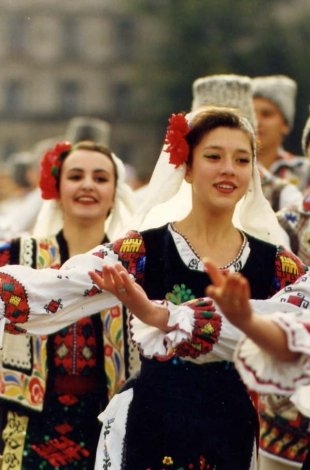
Festivals are rather popular and are celebrated in crowds. As a rule, official national holidays are accompanied with competitions, launch of new products, trade fairs, concerts, mass events and many other manifestations.
Every settlement of Moldova celebrates its Hram (holiday day of a settlement, which is different for every village or town). During Chisinau’s Day, into the central street of the city enterprises advertise and sell its products, scientific institutes demonstrate its achievements, artists deliver performances, ethnographic societies introduce customs and cultures...
read more
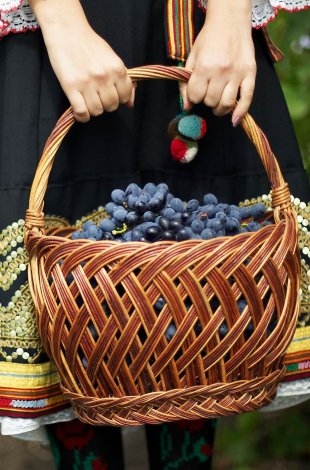
Vitiviniculture is a thousand-year long custom in our country. Since the very discovery of wine-making from juicy grapes, this beverage brings joy and perfect mood.
Republic of Moldova is acclaimed as a country with developed practices of vitiviniculture, placing it among the most important wine countries of the world. Our wines, spirits, sparking wines have been bestowed with hundreds of acclaimed awards at international exhibitions and contests. Our beverages are popular in more than 55 countries.
Moldovan wine-makers have developed and produce ...
read more
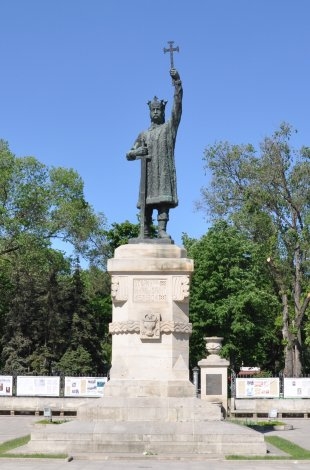
Chisinau is the capital of the Republic of Moldova. According to historical documents, the community was mentioned for the first time in 1466, in a charter of Stefan cel Mare, who sold a small property to Vlaicu Parcalab for 100 Tatar golden coins. Vlaicu Parclab descendants sold it to a boyar called Dragos, for 500 golden coins. Up to 1641 Chisinau was owned by several boyars and starting 1641 – by Iasi monasteries. Located on the commercial way Iasi-Tighina-Crimea, Chisinau became under the reigning of Vasile Lupu a trade and manufacture centre that connected the East with the Vest.
...
read more
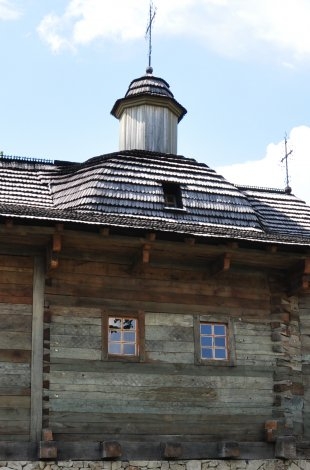
The “Assumption of Our Lady” Church in Causeni
The Assumption of the Virgin Mary Church is situated 80 km south-east of Chisinau. Some scientists believe that this church was constructed in XV-XVI centuries, while others allege that it appeared in XVII-XVIII centuries. The exact date when the only church with wall frescos in Bessarabia was built is not known (in the 15th century). The inner of the church has plenty wall frescos, in the style of late school of Hurez (Romanian Country). In the religious scenes one can see the representatives and founders of the chur...
read more
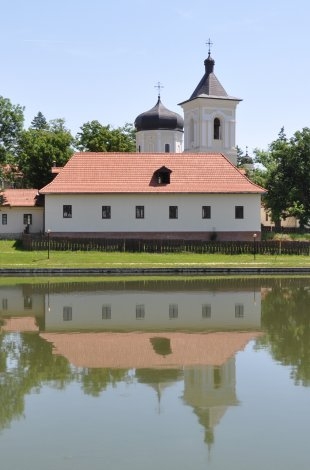
Monastery “Dormition of the Mother of the God”, Capriana
The encyclopaedia “Literature and Art of Moldova” (edition of the year 1985) provides a reference that Capriana Monastery was founded during the reign of Alexandru cel Bun (1399-1432), and got reconstructed by Stefan cel Mare (years of reign 1457-1504) prior to the year 1470 that is usually considered its foundation. In the monastery they tell that the cloister was supervised by Alexandru cel Bun and Stefan cel Mare since 1420s.
It is also known that in 154...
read more
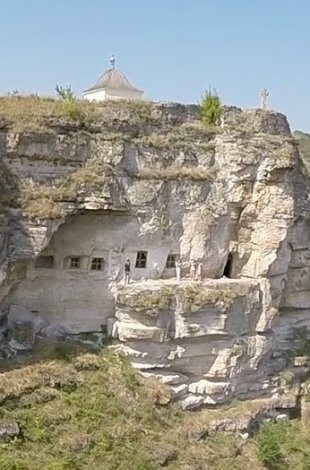
Moldova is renowned due to its unique cave monasteries established inside natural and manmade caves onto mount tops. Such cloisters represent interest both for researchers and tourists: the monasteries keep many mysteries to discover. Scientists suppose that there are much more cave monasteries in Moldova than it has been known at present. Apart of the well-known cloisters in settlements Tipova (Rezina district), Saharna (Rezina district), Butuceni (Orhei district), Japca (Floresti district); there are several more cloisters in Cosauti (Soroca district), Calaraseuca (Ocnita district), Molovata (Dubasari district),...
read more
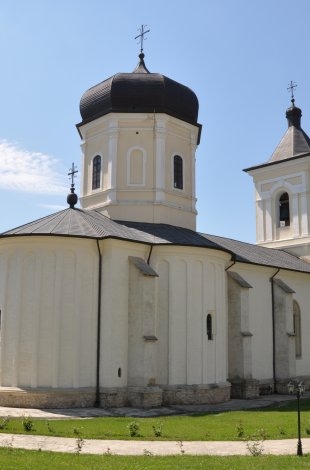
55 Orthodox Sacred Cloisters are opened in Moldova as of yet: 22 monasteries and 6 cloisters for monks, 24 monasteries and 2 cloisters for nuns, and 1 monastery for Old-Believers. The territories of present-day Moldova have been historically attracting people of faith who believed this land to be consecrated. To the turn of XVIII century the country saw more than 30 monasteries and cloisters opened.
Every cloister has a proper history that can reveal multiple captivating events. All the cloisters are located in the most picturesque places of Moldova, in deep forests or onto mount ...
read more
Moldova was voted by the “Lonely Planet” readers as the number one country “off the beaten path” in Europe. You never know what you will find here. Certainly not the highest mountain or the deepest sea, nor even the longest river, but here are many interesting facts no one ever expected to see:
The least explored destination in Europe, according to “Lonely Planet”
The history of Wine of Moldova starts in 3000 BC, while the first vines were recorded here 7000 years BC. The authenticity and uniqueness of Moldovan wines is represented by th...
read more
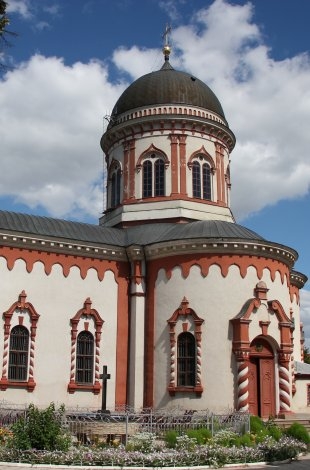
Monastery “Ascension of the God”, Noul Neamt
The lands that host Noul Neamt monastery at present belonged in XIX century to Neamt Lavra in Romania (founded in XIV century). The construction of a new replica monastery was insisted upon by the Head of Bessarabia Lavra estates Arch-monk Theophanous and the Spiritual leader of the Larva Arch-monk Andronicus. In the year 1859 they dispatched a petition pertaining to construction of Neamt monastery in the Lavra’s estate Chitcani, to which they got the consent of the Russian Tsar in the year 1864.
...
read more
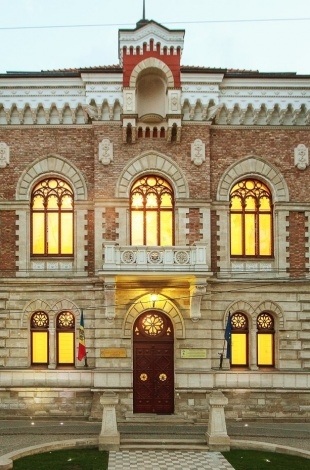
First Natalia Sicard’s Museum was opened in Moldova in the year 1876 in Vadul-lui-Voda resort settlement close to Chisinau. The museum exhibited a rich collection of antique items from Egypt, Italy, Greece and other countries.
In 1880s Ion Suruceanu, scientist acclaimed worldwide, established Pont Scythian’s Museum in Chisinau. The collection of this museum was replenished with exhibits from the deposits of Natalia Sicard. By the turn to ХХ century, Ion Suruceanu’s and Natalia Sicard’s Museums were abolished. In the year 1889 Bessarabia’s Zemstvo Museum was established on the basi...
read more